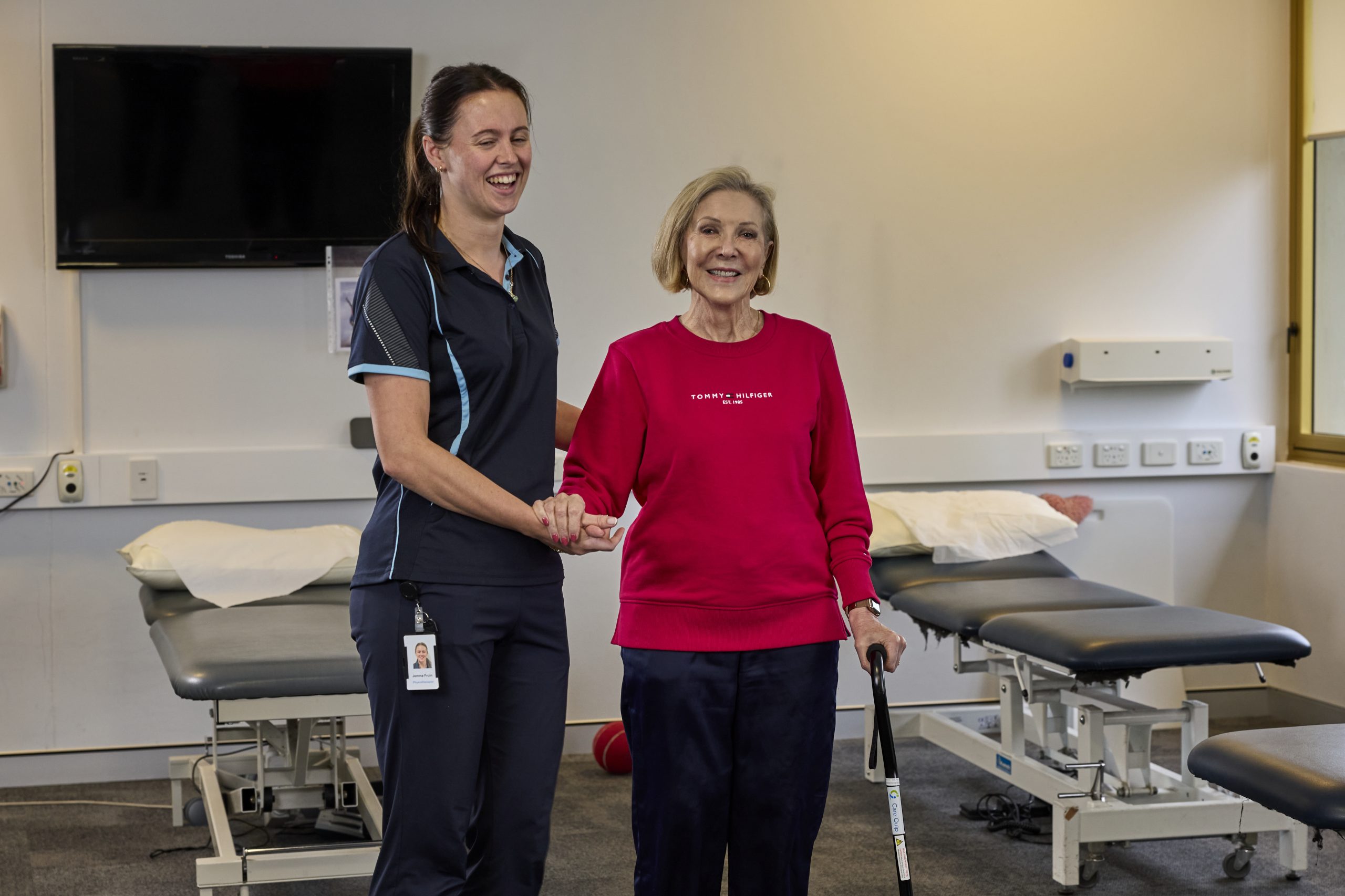

How long does it really take to recover from a knee replacement?
Your surgeon said six weeks. A friend took a year. A forum post insists you’ll be back on the golf course by spring. Everyone seems to be answering a different question, which is exactly why the range feels so unreliable.
Here’s the honest version: most people spend two to four days in hospital after a total knee replacement, walk unaided by around four to six weeks, manage most everyday activities by around three months, and reach full recovery, meaning the joint has properly settled and strengthened, somewhere between six and twelve months. Where you land in that range comes down to a set of factors that are largely identifiable, and several of them are within your control.
Knee replacement recovery time: the realistic milestones
“Recovered” means something different depending on what you’re measuring. Off strong pain relief, walking without a frame, back behind the wheel, back at your desk, or simply confident walking the dog around the block, each of those has its own timeline.
Most people come off strong pain medication within two to four weeks, relying on paracetamol or anti-inflammatories as needed after that. Walking unaided, without a frame or crutches, typically lands between four and six weeks, once strength and balance have caught up with healing.
Driving generally returns in that same four-to-six-week window, once you’re off opioid pain relief and confident you could perform an emergency stop. Desk-based work often lines up here too, while physically demanding roles usually need three months or longer. Everyday independence, including a proper walk with the dog, tends to arrive by the twelve-week mark.
Why has everyone given me a different number?
Because they’re measuring different things. One source means “walking unaided,” another means “back to full activity,” and a third is quoting an outlier. The range is real, and the next section explains what actually moves you through it.
What shortens or stretches recovery from knee replacement surgery
The range exists for identifiable reasons, not bad luck. Age and general health set a baseline. Strength going into surgery, often called prehab, gives your muscles a head start on the rebuild. Body weight affects the load on the new joint from day one. Having proper support at home, someone to help with meals, stairs and errands in the first few weeks, changes how quickly you can focus on rehab instead of survival admin. Full adherence to your physiotherapy program is the single biggest lever most people underestimate. Complications, such as infection or unexpected stiffness, are the main reason recovery stretches out.
Some of these you can influence directly. Others, like your age or an unforeseen complication, you can’t. Knowing which is which is what turns a vague timeline into a plan.
Knee replacement recovery time for elderly patients: what changes
Age shifts the calculus, but not in the way most people fear. Healing takes longer and the risk of complications rises, yet outcomes for older patients remain strong. What changes most isn’t the ceiling on recovery, it’s how much the support structure around it matters: supervision in the early weeks, falls-risk management, and genuine help at home.
For families arranging care on someone else’s behalf, this is often where the real anxiety sits: is Mum safe to go straight home, or does she need somewhere with more support around her first?
Do you need inpatient rehab after a knee replacement?
For uncomplicated, single knee replacements, a supervised home-based rehabilitation program produced mobility outcomes equivalent to inpatient rehab. Many surgeons now send straightforward cases home with a structured plan rather than a hospital admission.
Inpatient rehabilitation still earns its place in specific situations: living alone or with limited support at home, having both knees replaced at once, being an older patient with complex needs or a higher falls risk, or simply not progressing as expected in the first days after surgery, with pain that isn’t settling. If you recognise your situation in that list, that’s the conversation worth having with your surgical team.
Wolper’s inpatient and day rehabilitation programs are built for exactly these situations, with physiotherapy and nursing support structured around what each patient actually needs. For patients working on regaining confidence in the joint, hydrotherapy in Wolper’s heated pool is often part of that structured rehab.
How to set yourself up for the fast end of the range
The range is real, but where you sit in it isn’t down to luck. Prehab strength work before surgery, sorting your recovery plan and home support before the operation rather than scrambling from a hospital bed, full adherence to your physiotherapy program, and moving early within your team’s guidance all push you toward the faster end.
Every step here, from prehab through to structured rehab support, is about giving yourself the best possible shot at that faster timeline, not leaving it to chance.
Patients come to Wolper on referral from their surgeon or the surgical hospital, rather than by self-referral. If your surgery is booked, there are three things worth doing in the lead-up: confirm with your health fund that you’re covered for inpatient rehabilitation specifically at Wolper, call Wolper’s Rehabilitation Nurse Manager on 8328 6077 to discuss timing around your surgery date, and let your surgical hospital and surgeon know at pre-admission, or on the day of surgery, that you’ve arranged to come to Wolper. Ask your surgeon or GP about a referral to Wolper to get the process moving.
Frequently asked questions
How long is the hospital stay right after knee replacement surgery?
Most patients spend two to four days in the surgical hospital immediately after the operation, before either going home or transferring into a rehabilitation program, depending on progress and the support available at home.
How long does recovery take if you have both knees replaced at once?
Longer, and the early phase is more demanding. With both knees recovering at the same time, there’s no stronger leg to lean on while the other heals, which is one of the clearest situations where inpatient rehabilitation is commonly recommended.
How long do you stay in a rehabilitation hospital after a knee replacement?
This varies by individual progress and clinical need, so it’s worth confirming directly with the rehabilitation team managing your admission rather than relying on a generic figure.
When can you go back to work after a knee replacement?
Desk-based roles typically allow a return around four to six weeks, once pain is controlled and sitting for extended periods is comfortable. Physically demanding roles, involving standing, lifting or manual work, generally need three months or longer.
What slows down knee replacement recovery the most?
Skipping or under-doing the physiotherapy program is the single biggest cause of a slower recovery. Poor pain management in the early weeks and returning to full activity before the knee is ready are the next most common culprits.