
Hip replacement recovery: what to expect after surgery
Your operation is done. Now the questions are about you: how soon you’ll walk on your own, when you can drive, and what the weeks between hospital and home actually look like.
Most hip replacement recovery guides online are written by surgeons, about surgery. This one comes from Wolper Jewish Hospital, a private rehabilitation hospital in Woollahra, and picks up where many Sydney patients go next: inpatient rehabilitation.
Here’s what each stage of recovery involves, what a rehab team does with you day to day, and where Wolper fits in.
Starting rehabilitation after hip replacement surgery
Rehabilitation usually starts a few days after your operation, once your surgical team is happy for you to move on. Those first days belong to your surgeon: the operation itself, pain relief, and often your first steps with a frame.
By the time you arrive for rehab, the goal shifts from getting through surgery to getting your independence back.
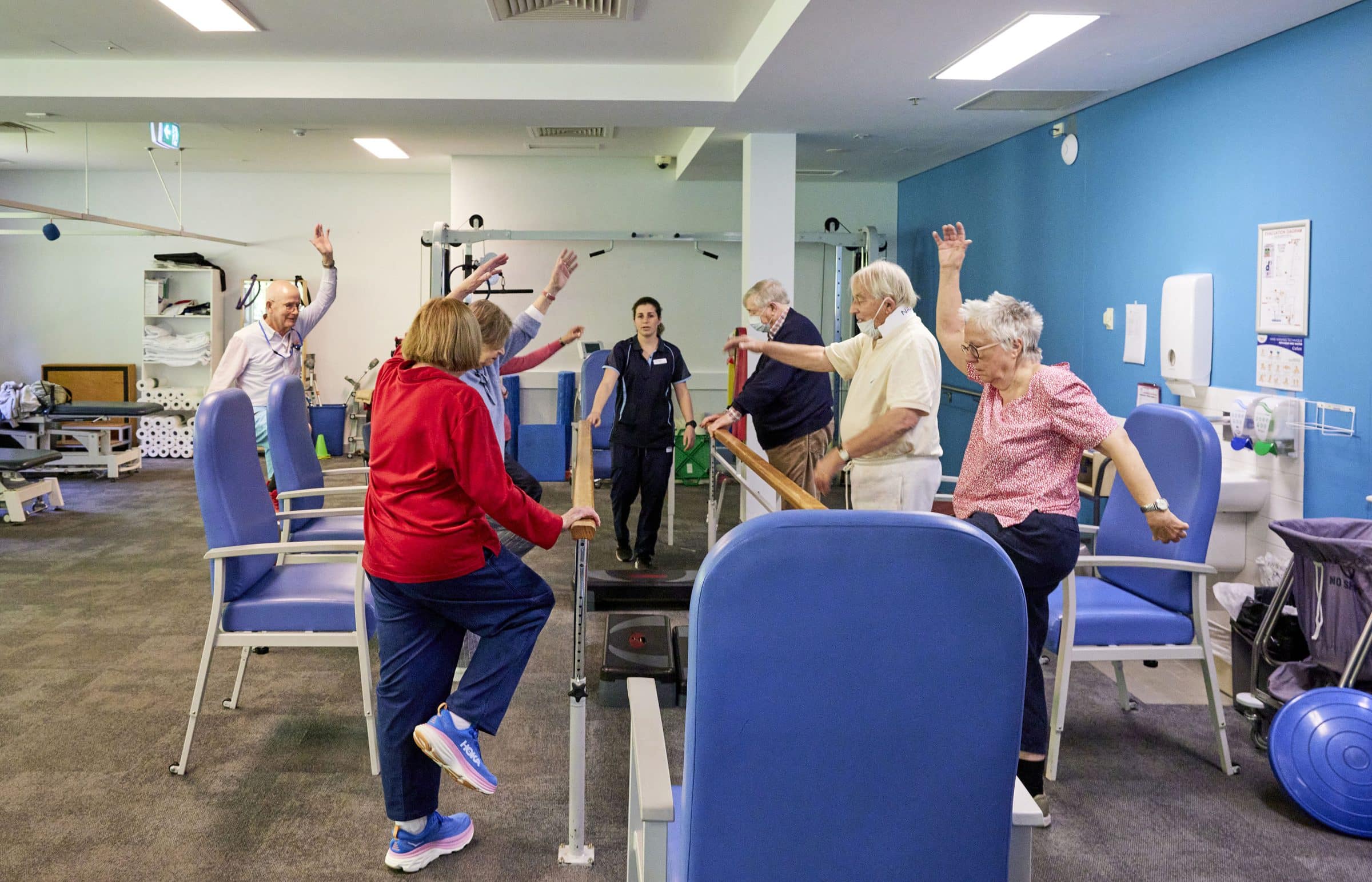
At Wolper, that begins with initial consultations with the multidisciplinary team. They look at how you’re moving, check your surgeon’s instructions and set recovery goals with you, whether that’s walking to the letterbox or managing the stairs at home.
From there, the work is getting you moving, little and often, with someone watching your technique. Early, supervised movement helps reduce pain, swelling and stiffness, and lowers the risk of complications like blood clots.
The hip replacement recovery timeline, stage by stage
Rehabilitation after hip replacement follows a fairly predictable path, though everyone moves along it at their own pace. The weeks below count from the day of your surgery, so if you arrive at rehab a few days after your operation, you’ll join partway through the first stage.
Weeks 1–2: early rehabilitation and mobility
Most people are already taking short walks with a frame by the time they reach rehab, because your health team will usually get you up with a walking support soon after surgery (healthdirect). Rehab builds on those first steps: longer walks, getting in and out of bed and a chair safely, and moving from a frame to crutches when your physiotherapist thinks you’re ready.
Physiotherapy anchors each day, and occupational therapists help with everyday tasks like showering and dressing. Your nurses keep an eye on your wound and dressings, and your surgeon will let you know when any stitches or staples need to come out, plus they will assist with pain management.
Weeks 3–6: building strength and independence
Over these weeks you’ll lean on walking aids less and do more for yourself: short walks outside, light jobs around the house, getting in and out of a car.
Driving is the milestone people ask about most. There’s no set date, because it depends on how your recovery is going, so it’s a call to make with your surgeon and physiotherapist.
This is also when hydrotherapy after hip replacement often comes in, once your wound has healed and your surgeon is happy. Warm water supports some of your body weight, so you can practise walking and build strength with less load through the new joint.
Weeks 6–12 and beyond: longer-term recovery
After about 3 months, most people are back to most of their normal activities, though it can take up to 12 months to feel the full benefit of a new hip. Strength, stamina and confidence often take longer to return than the scar takes to heal, which is why it’s worth keeping up physio after you leave hospital.
How quickly you get there depends on your age, your general health and how consistently you follow a structured rehab program. Some people manage that well at home. Others find it easier with a team checking their progress every day.
What makes rehabilitation in a dedicated facility different
The biggest difference is a whole team working on your recovery every day, all in the same building.
At Wolper, your program follows your surgeon’s instructions and is delivered by rehabilitation physicians, nurses, physiotherapists, occupational therapists, exercise physiologists, social workers and dietitians working together on your goals. So if your physio sees you struggling with steps, your occupational therapist can plan how you’ll manage the ones at home.
Daily sessions also mean small setbacks, like a limp creeping back or pain after a longer walk, get picked up within a day instead of at your next appointment.
Hip replacement recovery FAQs
How long does it take to fully recover from a hip replacement?
Most people are back to light daily activities around 6 weeks and most of their normal activities by about 3 months. For some, it takes up to 12 months to feel the full benefit of the new hip.
When will I be allowed to drive again after my hip replacement?
There’s no fixed timeframe, so your surgeon and physiotherapist will decide when you’re ready. Raise it at your follow-up appointments rather than counting down to a particular week.
Do I have to go to a rehabilitation hospital after a hip replacement, or can I go straight home?
Not everyone needs inpatient rehab, and many people recover well at home with outpatient physio. It tends to suit people who need more support to move safely, such as those living alone, and your surgeon will recommend what fits your situation.
What does hydrotherapy actually do for a new hip?
Warm water takes some of your body weight, so you can practise walking and strengthen the muscles around your hip with less strain on the joint. It usually starts once your wound has healed and your surgeon gives the go-ahead.
Will my private health insurance cover rehab after a hip replacement?
Most people with health insurance are covered however it depends on your policy and level of hospital cover. Before your surgery, check with your health fund that you’re covered for inpatient rehabilitation at Wolper.
Recovering at Wolper
The weeks after surgery feel far less uncertain when you know who’ll be beside you at each stage. As a hip replacement patient at Wolper, you’d have a private room with an ensuite, a daily program built around the goals you set with your team, and physiotherapy, occupational therapy and hydrotherapy under one roof in Woollahra.
Having physios, nurses and doctors checking in every day means you’re never working through the stages of hip replacement recovery alone.
See how Wolper’s orthopaedic rehabilitation program works
Admission needs a referral from your surgeon or surgical hospital, so it’s worth raising Wolper with your surgeon before your operation. Our admission information page explains what to expect.